
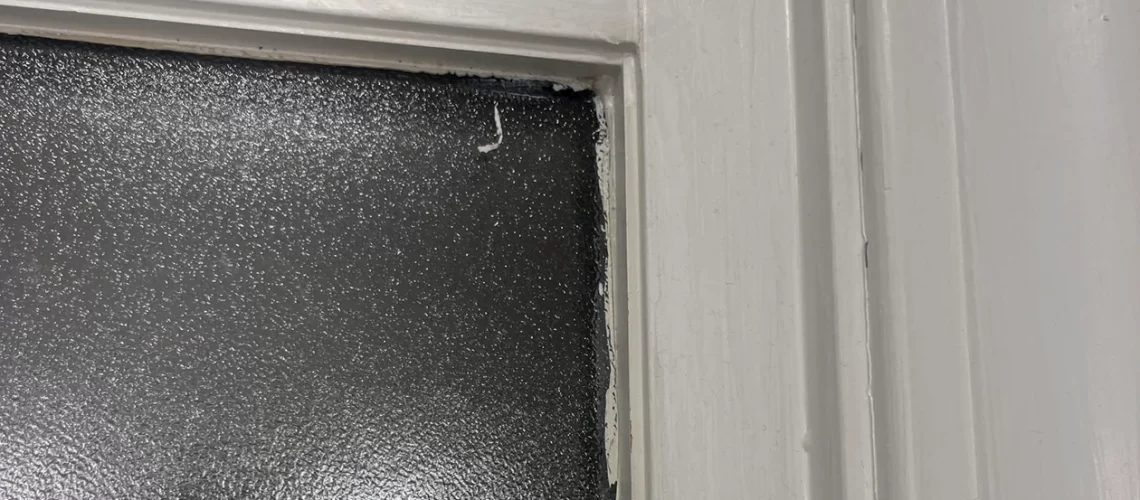
The most effective way to get paint off glass is by using a razor blade scraper held at a 45-degree angle combined with a lubricant like soapy water or glass cleaner. For chemical removal, rubbing alcohol works best for acrylics, while acetone or vinegar tackles stubborn spots. The method you choose depends on the paint type and how long it’s been there.
How do you get dried paint off glass?
Dried paint is best removed mechanically rather than chemically. The key is lubricating the glass first to prevent scratching—skip this step and you’ll trade paint marks for permanent score lines.
What you’ll need:
- 4-inch razor scraper (metal blade)
- Lubricant (dish soap mixed with warm water)
- Microfibre cloth
- Spray bottle
The razor and lubricant method:
- Saturate – Spray the dried paint generously until the surface is wet. Don’t be stingy here.
- Angle – Hold the blade at 45 degrees to the glass. Too steep and you’ll gouge; too flat and you’ll skip over the paint.
- Push – Glide the blade forward in smooth strokes. Lift to retract—never drag the blade backwards.
- Listen – If you hear a gritty sound, stop immediately and add more lubricant. That noise means you’re scratching.
Don’t have a razor scraper? A plastic card or old credit card works for fresh latex paint, but dried paint usually requires a proper blade. You can pick up a scraper from Bunnings for under $10.
What is the best paint remover for glass?
For acrylic and latex paint, rubbing alcohol is the best solvent. For oil-based or enamel paint, acetone is the most effective option. Spray paint responds well to WD-40, which lubricates and lifts the bond without harsh scrubbing. Stick to rubbing alcohol or vinegar if you are painting window frames made of vinyl, as acetone can melt the plastic.
Here’s how each option compares:
| Paint Remover | Best For | Speed | Risk to Frames |
|---|---|---|---|
| Rubbing Alcohol | Latex/Acrylics | Fast | Low |
| White Vinegar | Hardened spots | Slow (needs heat) | None |
| Acetone | Oil-based/Enamel | Very fast | High (melts vinyl) |
| WD-40 | Spray paint | Fast | Low |
A word of caution: Acetone is aggressive. If your window has vinyl or plastic frames, acetone will damage them. Stick to rubbing alcohol or vinegar for windows with synthetic frames.
Will WD-40 remove paint from glass?
Yes, WD-40 effectively removes spray paint and adhesive residue from glass by loosening the bond between the paint and the surface. If you missed a spot while preparing your home for painting and ended up with overspray on the glass, WD-40 is a solid choice.
How to use it:
- Spray WD-40 generously over the paint—don’t hold back.
- Let it sit for 2-3 minutes. This dwell time is crucial; it’s doing the hard work so you don’t have to.
- Wipe away with a clean rag.
Important: WD-40 leaves a greasy film behind. Follow up with dish soap and warm water to degrease the window, otherwise you’ll have smear marks catching every bit of afternoon sun.
Will WD-40 damage glass?
No, WD-40 won’t damage, etch, or scratch glass. However, it can deteriorate rubber weather stripping if left sitting too long, so wipe up any overspray on seals promptly.
Will vinegar remove paint from glass?
Yes, white vinegar can remove paint, but it works best when heated. It’s less aggressive than chemical solvents, making it a safer choice for vinyl window frames and anyone wanting to avoid harsh fumes.
The hot vinegar compress technique:
- Heat a cup of white vinegar in the microwave until warm (not boiling—you need to handle it).
- Soak a rag in the hot vinegar.
- Hold the rag against the paint spot for 5-10 minutes. The heat and acidity work together to soften the paint.
- Scrub with a rough sponge or scrape with a blade while the paint is still soft.
This method takes longer than chemical options but costs next to nothing and won’t stink out your house.
Does baking soda remove paint from glass?
Baking soda alone is abrasive and can scratch glass if used dry. It works better when mixed with vinegar to create a foaming reaction that helps lift paint from the surface. Apply the fizzing mixture, let it work for a few minutes, then wipe away. Don’t scrub the dry powder directly on glass.
Will rubbing alcohol remove paint from glass?
Yes, isopropyl alcohol is highly effective at dissolving latex and acrylic paints. It works by breaking down the polymer chains in the paint, turning a stubborn spot into something you can wipe away.
Best use case: Rubbing alcohol excels at removing small paint splatters—those annoying dots that flick off rollers onto nearby windows during interior painting.
Quick tip: Standard 70% alcohol works, but 90% or higher works significantly faster. If you’re tackling more than a few spots, the stronger concentration saves real time.
Simply soak a cloth in rubbing alcohol, hold it against the splatter for 30 seconds, then wipe. For stubborn spots, repeat the process rather than scrubbing harder.
How to remove dried paint from glass when nothing else works
If solvents aren’t cutting through, default back to the razor scraper method. Sometimes paint has bonded too well for chemicals alone, particularly if it’s been baking in the sun for months.
The nuclear option: For truly stubborn paint, combine methods. Apply your solvent of choice, let it dwell, then use the razor scraper while the paint is softened. The chemical does the loosening; the blade does the lifting. Once you’ve wiped up the chemical residue, ensure you follow safe paint disposal guidelines for your solvent-soaked rags.
Does paint wash off glass?
Fresh water-based paint washes off with warm water and a cloth—no special products needed. Once the paint has cured (fully dried and hardened), water alone won’t touch it. That’s when you need solvents or scraping.
Final polish: the streak-free finish
After removing the paint, you’ll likely have residue, smears, or solvent marks left behind. Clean the glass properly with this method:
- Mix a few drops of dish soap in warm water.
- Wash the entire pane to remove any chemical or lubricant residue.
- Rinse with clean water.
- Dry with a microfibre cloth or squeegee, working from top to bottom.
Getting spots off windows is often the most tedious part of the clean up after painting, but having the right tools makes it faster. This final step is what separates a job done from a job done well.
